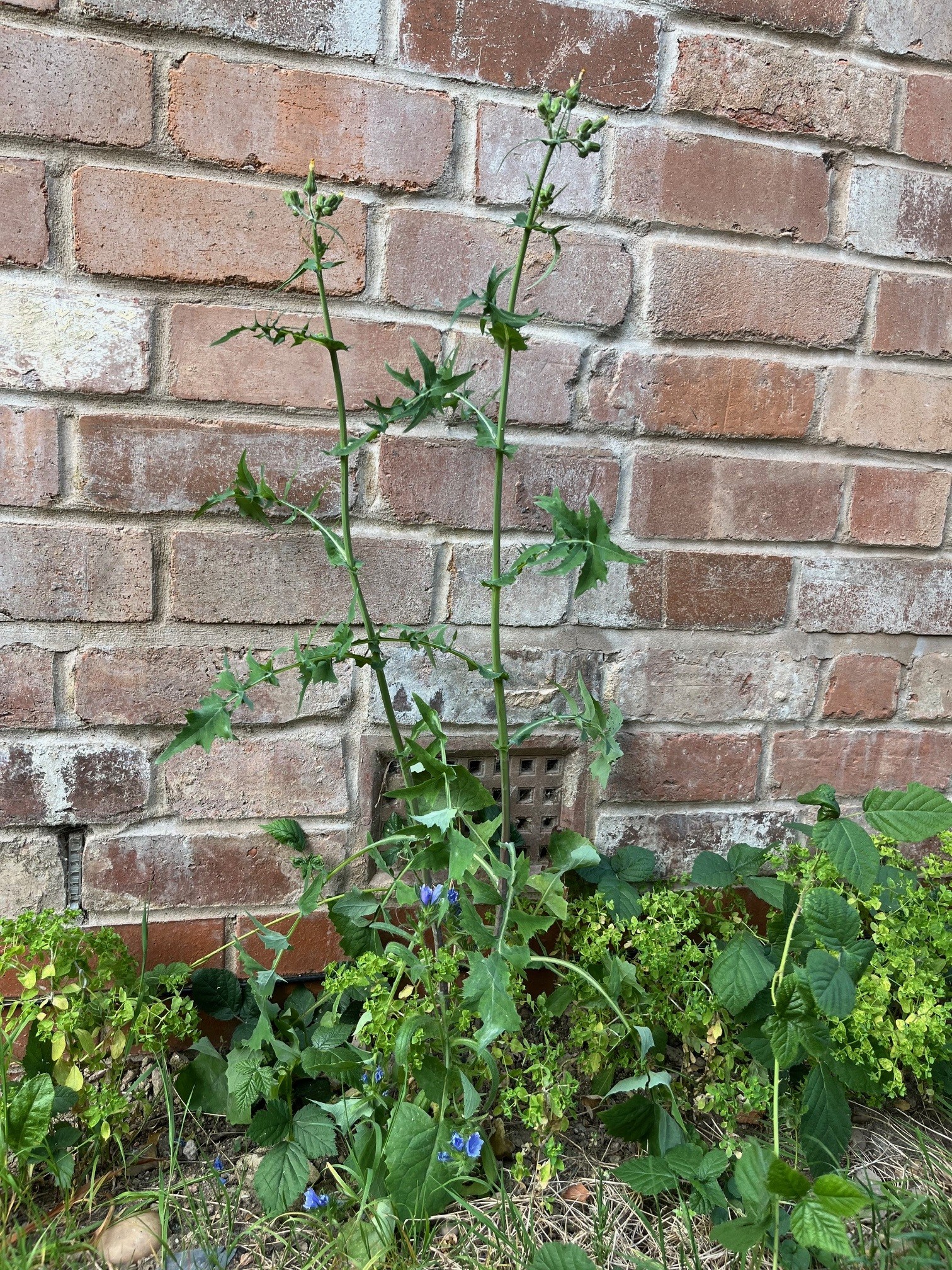
I scattered wildflower seeds in our shared back alley last springtime. I did not know what was going on in the soil. I did not know if the brambles, swept aside, would concede space for these wildflower to grow. A few brave shoots have gained momentum and are thriving. Others have withered where a neighbour unintentionally crushed them with his garden bin. Such is the unpredictability of a ‘system’. Yet we talk about strategy for systems change as though we can control it.
The surging to the right of the Overton window (what’s considered socially acceptable and politically possible) in the UK right now reveal to us that plans – most thoroughly conceived of just months earlier – can suddenly feel out of reach, even naïve. It calls into question the usefulness of objectives, KPIs, monitoring plans. What are they in service of? Are they to give the Board a (false) sense of security in a direction of travel for which the CEO can be held accountable? Are they to help give teams an (also false) sense of certainty? Are they in service of the constant fundraising effort?
These are all very relatable motivations – in a world of scarcity and competition, we are all caught up in playing this game. And yet we are dancing within an illusion, an illusion of control.
As those working with systems thinking can tell you, we are not in control. Writers like Elizabeth Sawin remind us of the complexity we’re dealing with – all those causal loops intersecting – we can barely make sense of them on paper, let alone in the messiness of the real world, where we are called to respond by ‘multi-solving’. We can only lean in and listen. Others, like Adam Kahane, describe the need for radical engagement in three dimensions (as actors in the ecosystem, as parties with our own interests, and as entangled kin) if we are to transform systems. A tight, precise, linear strategy won’t cut it. Playing with concepts like tipping points feels closer to where we might need to be working, with new toolkit recently released by Peter LeFort and a Huddle of collaborators offering a range of tools and ideas.
And in a wider context of teams working close to burn-out, running to stand still or even slide backwards, struggling to ensure the safety and wellbeing of their own people against a violent, racist backdrop, it’s got the point where I’ve been part of too many projects where the conditions weren’t right for developing strategy.
It’s just not the shortcut to accountability, direction or impact that we think it is. There is a very hollow sense of achievement in a beautifully presented theory of change or well-worded vision statement when its created in a silo, or when the team culture is characterised by overwhelm, or when its disconnected to what’s actually needed in the system around it. Yes, pretty much all of us do co-create strategy with a broad range of colleagues and collaborators rather than treating it as a desk exercise, and some strategies are developed with the meaningful leadership – or at least involvement – of people with lived experience of the injustices we’re hoping to address. But this doesn’t feel like enough.
I think many of us know, by now, in our guts, that there are better ways to create mutual accountability across organisations, and better ways to help teams navigate uncertainty with honesty, integrity and care. Resisting the temptation to pin down a fixed strategy but instead leaning into the signals we’re seeing, hearing, feeling, and paying attention to the fractals of the ecosystems we’re swimming in feels more honest. And more likely to contribute to transformative systems change.
I read Emergent Strategy some time ago, quickly joining a large and diverse tribe of fans of adrienne maree brown who generously shares her wisdom, gained through hard-won insights from her own practice, in a way that resonated deeply. Emergence, for her, is “another way of speaking about the connective tissue of all that exists”. In the introduction, she explains:
“With our human gift of reasoning, we have tried to control or overcome the emergent processes that are our own nature, the processes of the planet we live on, and the universe we call home. The result is crisis at each scale we are aware of, from our deepest inner moral sensibilities to the collective scale of climate and planetary health and beyond, to our species in relation to space and time… Emergent strategy is how we intentionally change in ways that grow our capacity to embody the just and liberated worlds we long for.”
Since first picking this book up, I have gone back to it time and again, seeking guidance, assurance or challenge. Now I’m planning to take a deeper dive back into it as I reflect on my own practice.
So, as someone who works with teams to co-create organisational strategy, I’m not hanging up my boots, but I am yearning to rethink the meaning of strategy to meet the moment we’re living in. Where we need to act with boldness and urgency yet simultaneously move slowly with care for human and more-than-human kin if we are to play our part in building the new world we know is trying to emerge. What does it look like to recognise the boundaries of your work and make tough decisions about where to focus in a way that feels both generative on a human level and transformative on a systems level?
If anyone else is thinking along similar lines about how they approach strategy, I’d love to chat. Maybe a few of us could even come together to swap ideas and see what emerges? I’m definitely ready to change up my approach. The seductive mantra ‘move fast and break things’ has been pervasive over the years across many sectors and fields. Let’s see if we can counter that with something that alters our destructive trajectories and helps us to navigate towards pathways where experimentation and innovation are instead oriented to justice, care and regeneration?